Apr 15, 2026
What the Chuckwalla Campaign Teaches Us About Wildlife Protection
Equitably Stewarding Nature is a discussion series brought to you by the Wildlife Workgroup of the America the Beautiful for All Coalition.
When we think about wildlife protection, we tend to picture scientists counting species in remote landscapes, clipboard in hand, and far from any neighborhood. But what if the most effective path to protecting wildlife doesn't start with a species count at all? What if it starts with a story told over coffee, a text about trash in the water, a community lining up in 120-degree heat to say this place matters to us?
That's the question at the heart of the first session in our Wildlife Workgroup's Equitably Stewarding Nature discussion series. Titled Yo Cuento: Storytelling, Leadership, and the Protection of Our Shared Outdoors, leaders from Latino Outdoors and the CactusToCloud Institute shared how community-centered storytelling and place-based science converge to produce lasting protections for people, for land, and for the species that depend on both.
Yo Cuento: Where Storytelling Becomes Advocacy
For Latino Outdoors, the outdoors is for all. All here includes people of every socioeconomic background and our animal life as well. Their work is built on three interconnected pillars that function as a reinforcing cycle: Vamos Outdoors cultivates meaningful experiences on the land; Yo Cuento uplifts personal narratives and collective memory; and Crecemos Outdoors develops the leaders who carry those stories forward.
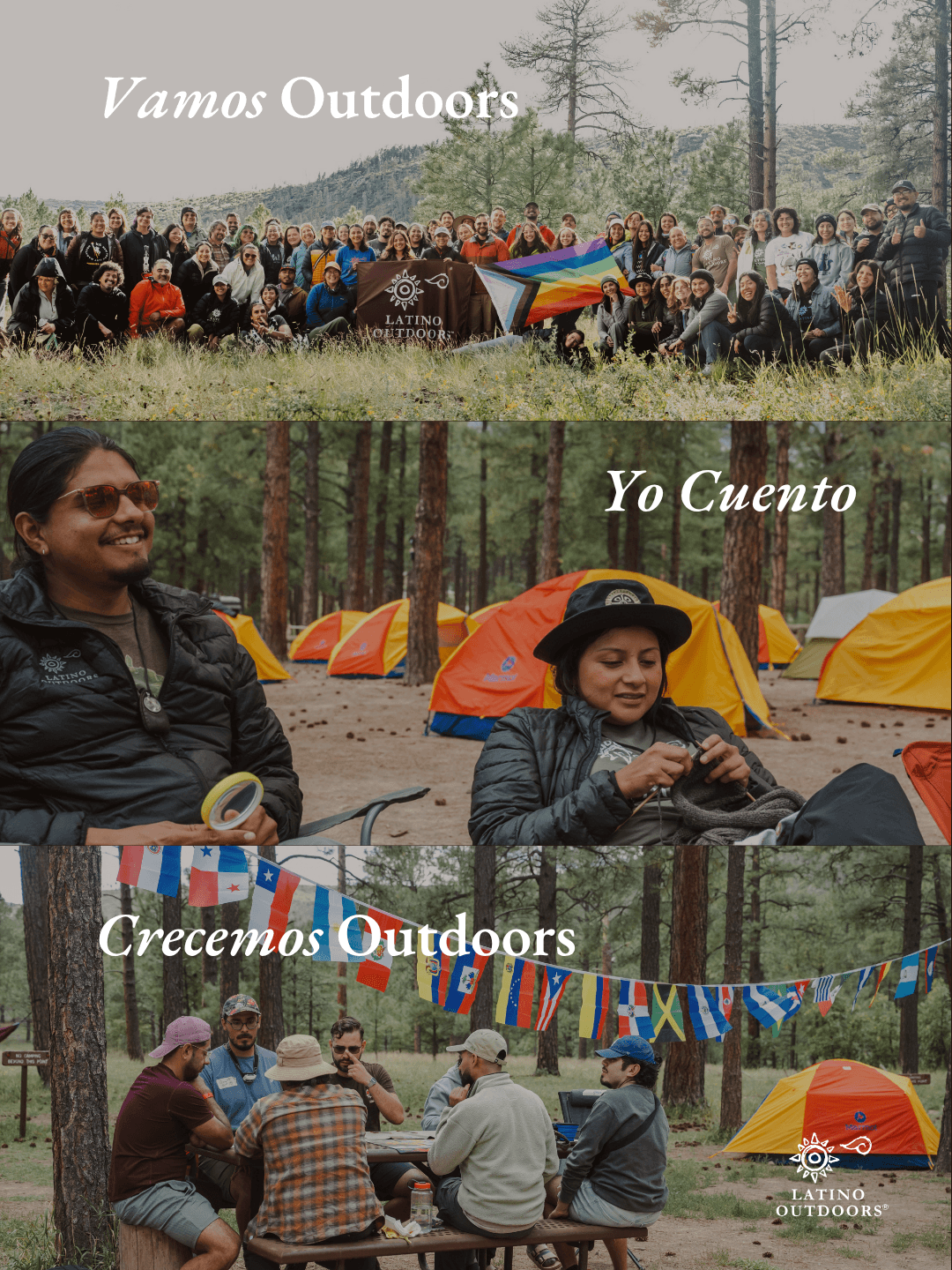
| Image Credit: Latino Outdoors
As Jazzari Taylor, Latino Outdoors' national policy advocate, put it during the session, storytelling means speaking for "those who may not have a voice, and that does include not only just people but our animal life as well." Lived experience creates stories, stories build leaders, and leaders expand access, and the cycle begins again.
This reframes what wildlife advocacy can look like. The 900,000+ acres Latino Outdoors helped protect across four national monument campaigns with specific species outcomes including 19 species protections at Sátila Highlands, bighorn sheep and desert tortoise at Chuckwalla, and the spotted owl at San Gabriel, weren't wildlife-first campaigns. They were community-first campaigns that produced wildlife outcomes. The species weren't data points to be cataloged; they were part of the story people told about why a place mattered.
Species as Cultural Anchors
The session also touched on the fact that species function as cultural anchors, not just ecological indicators. When Indigenous and Latino communities tell stories about their relationship to a landscape, the wildlife living there shows up as part of a shared heritage and not as an abstraction. The spotted owl isn't just an endangered listing; it's woven into the story of why the San Gabriel Mountains matter to the communities who live in their shadow. The desert tortoise isn't just a species status; it's part of what makes the Chuckwalla landscape home.
This expansion, from species as scientific concern to include species as cultural and relational presence, opens a different door for members of our Wildlife Workgroup and our broader coalition. It suggests that the most durable wildlife protections are the ones communities feel ownership over, because the animals and plants are part of the story they tell about who they are and where they belong.
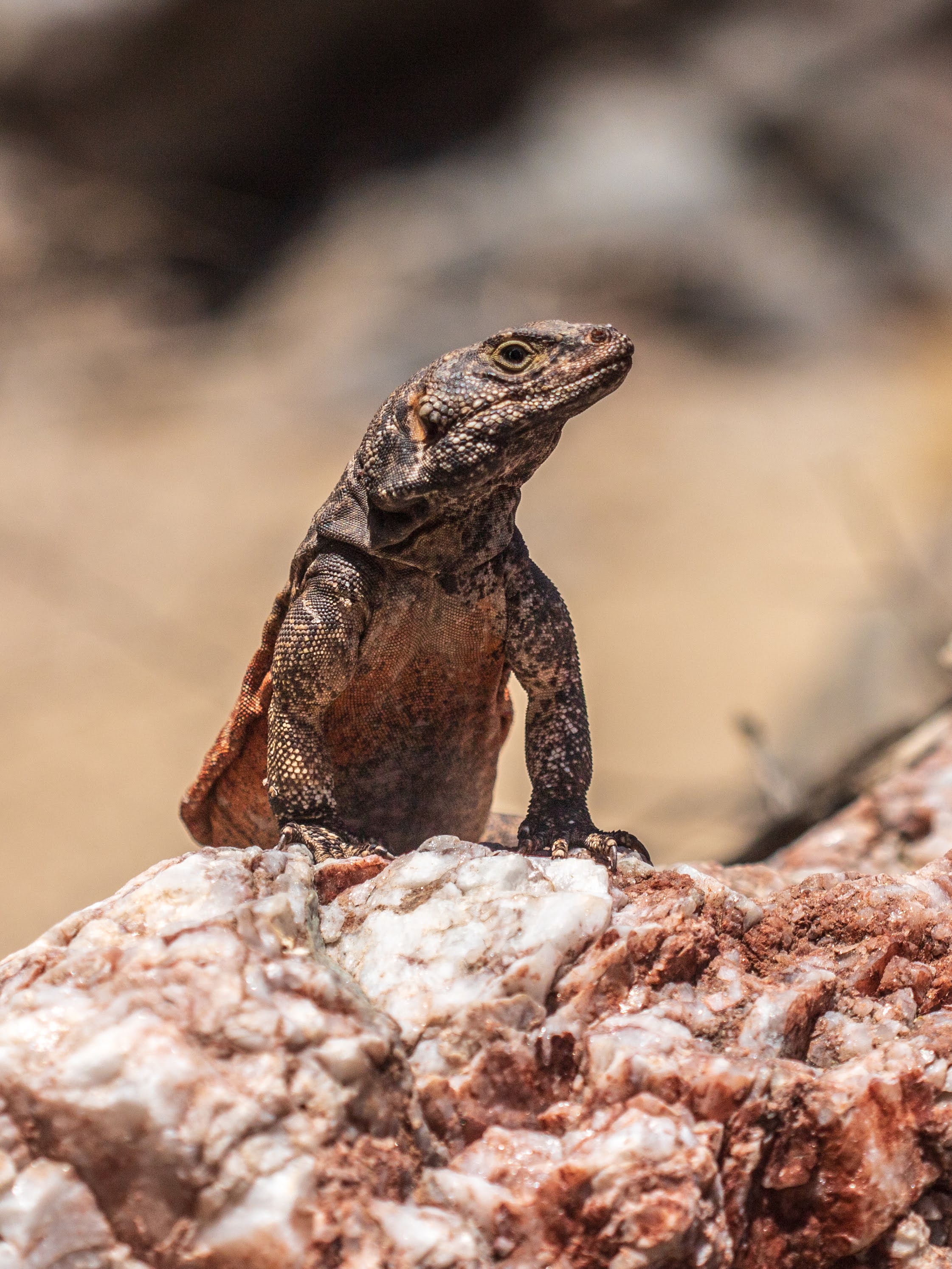
A Chukwalla Lizard | Image Credit: Colin Barrows, CactusToCloud Institute
The Chuckwalla Campaign: Place-Based Science Meets Community Power
Sendy Hernández Orellana Barrows, co-founder of the CactusToCloud Institute, brought this into focus with the story of the Chuckwalla National Monument. CactusToCloud is a four-person nonprofit based in the Coachella Valley, a small team working with willing partners to do the outsized work to protect their backyard.
The Chuckwalla designation, signed by President Biden in 2024, permanently protects over 600,000 acres of desert landscape spanning Riverside and Imperial Counties. The monument protects wildlife corridors connecting distinct mountain ranges, each with unique species assemblages, including the Orocopia sage, a plant found nowhere else on Earth, and the Chuckwalla lizard that gives the monument its name.
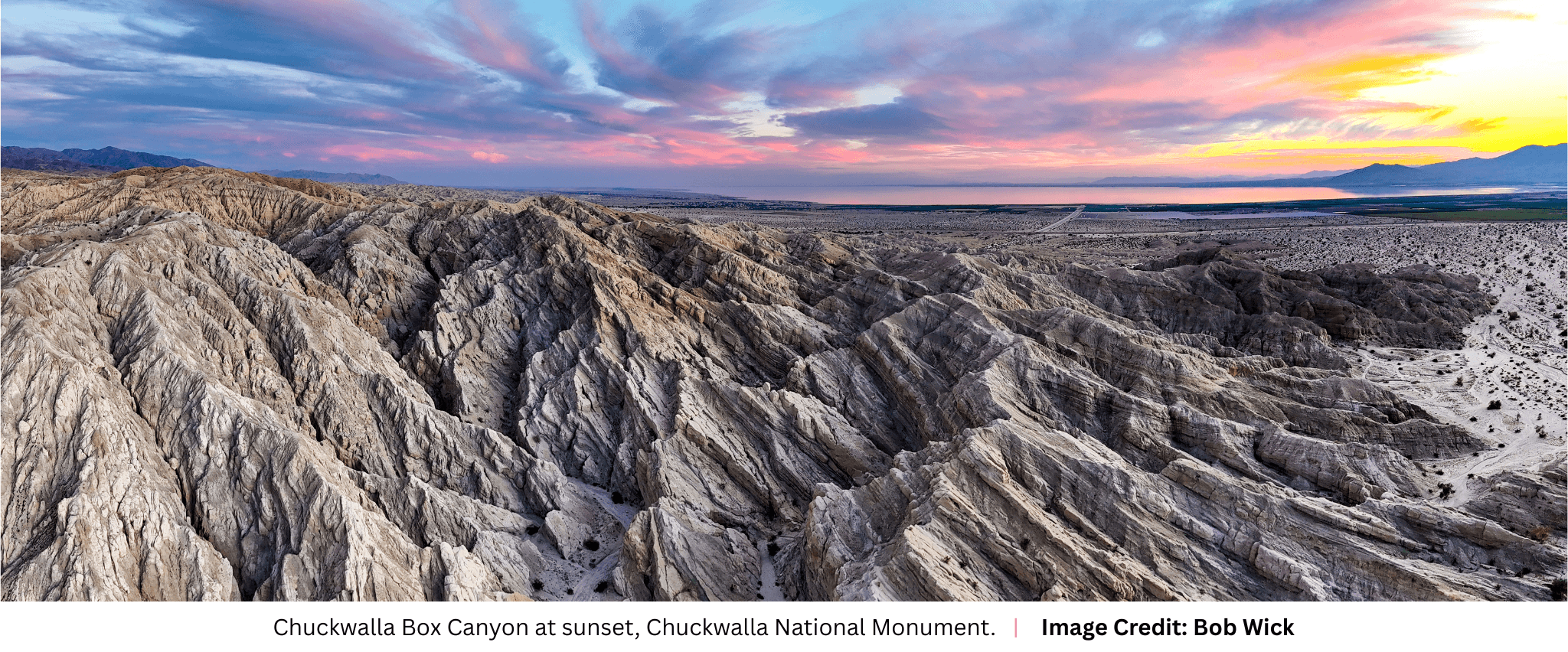
The collection of people that made this designation happen didn't lead with "save the Orocopia sage." They led with community belonging, equitable access, cultural heritage, and climate resilience. The wildlife protections came embedded in that broader case. The campaign was five-plus years in the making, built through the Protect California Deserts Coalition starting in 2019. It moved through a House bill introduced by Congressman Dr. Raul Ruiz, a Senate bill from Senator Alex Padilla, and a California Senate Joint Resolution that passed with 74 yes votes and zero no votes. As Sendy emphasized, this monument has had bipartisan support from the beginning.
What made the campaign work was the knowledge CactusToCloud Institute brought as a local organization. Their expertise in desert ecology gave the coalition its scientific foundation, AND their commitment to bilingual community engagement ensured that the people most connected to the land were also the ones shaping the advocacy. They ran presentations, hikes, and aerial tours. They briefed national partners who weren't familiar with the area, so those organizations could accurately represent the landscape in rooms that CactusToCloud Institute couldn't always be in. And they helped launch and provide mentorship to a youth ambassador program, a first of its kind within a national monument campaign—to diversify the voices showing up in decision-making spaces.
This photograph is of community members lining up outside the Department of Interior's public meeting in Indio, California, on a Friday morning in the summer, in a valley where temperatures reach 120°F.
Sendy shares that the line wrapped around the building. A community showing up to say this land is ours to protect.
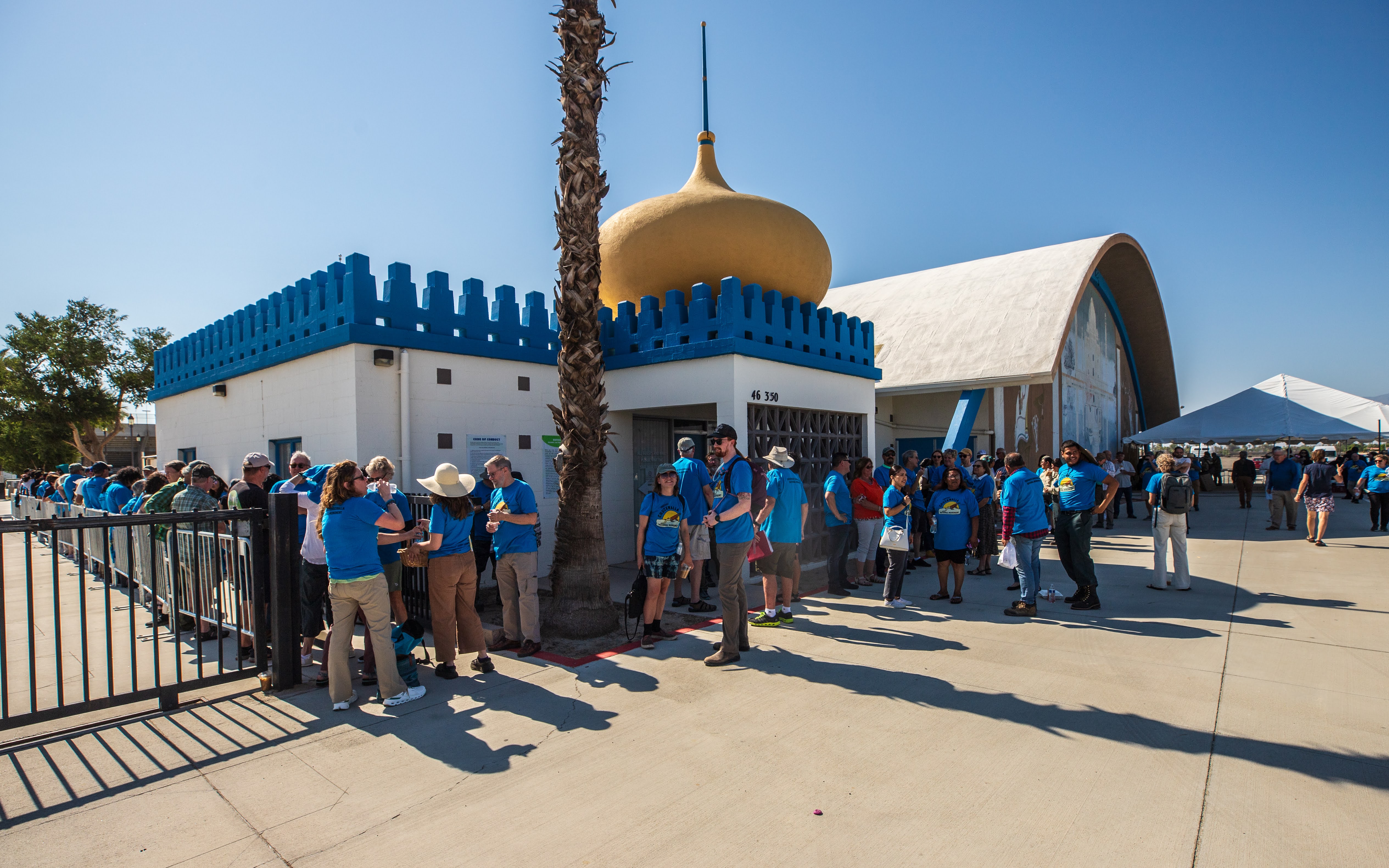
| Image Credit: Colin Barrows, CactusToCloud Institute
The Health Connection Hiding in Plain Sight
The session also surfaced a critical but often overlooked dimension: the public health stakes of land and wildlife protection. Communities surrounding the Salton Sea face severe respiratory health impacts from exposed lakebed dust. The clean water flowing from Chuckwalla's alluvial fans into the Salton Sea is part of that ecosystem's fragile health infrastructure. Protecting those undisturbed desert soils—which also function as carbon sinks—is climate resilience work in a community already living on the front lines of extreme heat.
The access question is, itself, also a health equity issue. The Chuckwalla designation as a national monument rather than a national park was a deliberate choice: Bureau of Land Management (BLM)-managed monument lands are fee-free and don't require reservations, removing economic barriers that keep many community members from experiencing the outdoors. As Sendy noted, for people who can't travel long distances, having a national monument in their backyard changes the equation entirely.
What This Means for How We Do This Work
This session gives us much to reflect on. Especially about what happens when we move wildlife protection out of its historical biological silo and into a broader socio-political framework where nature, justice, and health are understood as inseparable.
The Latino Outdoors and CactusToCloud Institute models offer a question for the Wildlife Workgroup and the broader AtB4A coalition: if the most effective pathway to species and habitat protection runs through community narrative and coalition building rather than through species-specific campaigns alone, what does that mean for how we prioritize, resource, and design our work?
A win for a lizard, it turns out, is also a win for a community. And the community knew it first.
Watch the full session:
The Equitably Stewarding Nature discussion series is hosted and produced by the Wildlife Workgroup of the America the Beautiful for All Coalition.
America the Beautiful for All is a 300+ member coalition working at the nexus of conservation, environmental justice, and public health.
