Feb 2, 2026

As someone who grew up with a deep respect for the ocean and now serves as the ocean co‑lead for the America the Beautiful for All Coalition, the fight against the imposition of deep sea mining in the US Pacific territories is personal to me. Oceania isn’t just a region on a map—it’s home to communities and peoples whose cultures, identities, and futures are woven into the sea. In my role with the coalition, I feel a responsibility to help ensure that the voices of our communities—voices too often overlooked in national decision‑making—are lifted, centered, and impossible to ignore.
Opposition to deep sea mining in the U.S. Pacific territories has grown into a powerful, unified movement—one grounded in Indigenous knowledge, community leadership, and a shared commitment to protect some of the most ecologically significant ocean regions on Earth. In recent weeks, the America the Beautiful for All Coalition joined forces with partners across the Pacific, including Friends of the Mariana Trench, Micronesia Climate Change Alliance, and Right to Democracy, to elevate voices long excluded from federal decision-making processes.
This collaboration reached a milestone when local and national partners submitted more than 60,000 petitions, letters, and public comments opposing the Trump administration’s plans to allow deep sea mining near the Mariana Trench. The submissions represented a sweeping coalition—environmental groups, scientists, community organizations, and everyday residents determined to protect their ocean home.
This surge of civic engagement unfolded alongside growing national scrutiny. A congressional oversight hearing on January 22 revealed bipartisan concern over deep sea mining in the Pacific territories, underscoring the cultural, environmental, and democratic implications of such activities. Lawmakers across party lines entered testimony from Indigenous leaders in Guam, the Northern Mariana Islands, and American Samoa—including contributions facilitated by Right to Democracy’s Environment and Democracy Fellows.
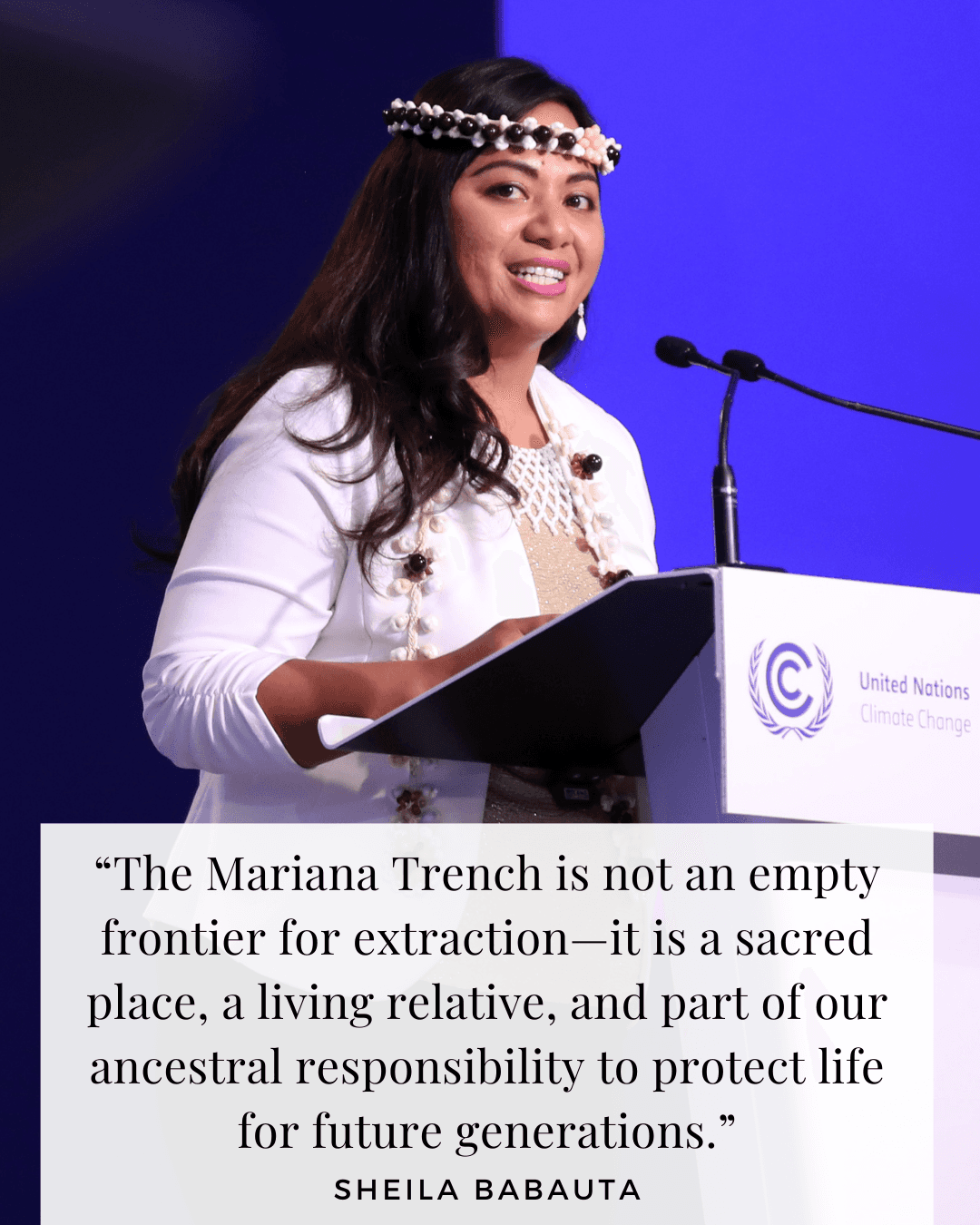
“This is a powerful reminder that Indigenous knowledge, community consent, and ecological stewardship must guide decisions that affect our oceans,” said Sheila Babauta, Chair of Friends of the Mariana Trench. “The Mariana Trench is not an empty frontier for extraction—it is a sacred place, a living relative, and part of our ancestral responsibility to protect life for future generations.”
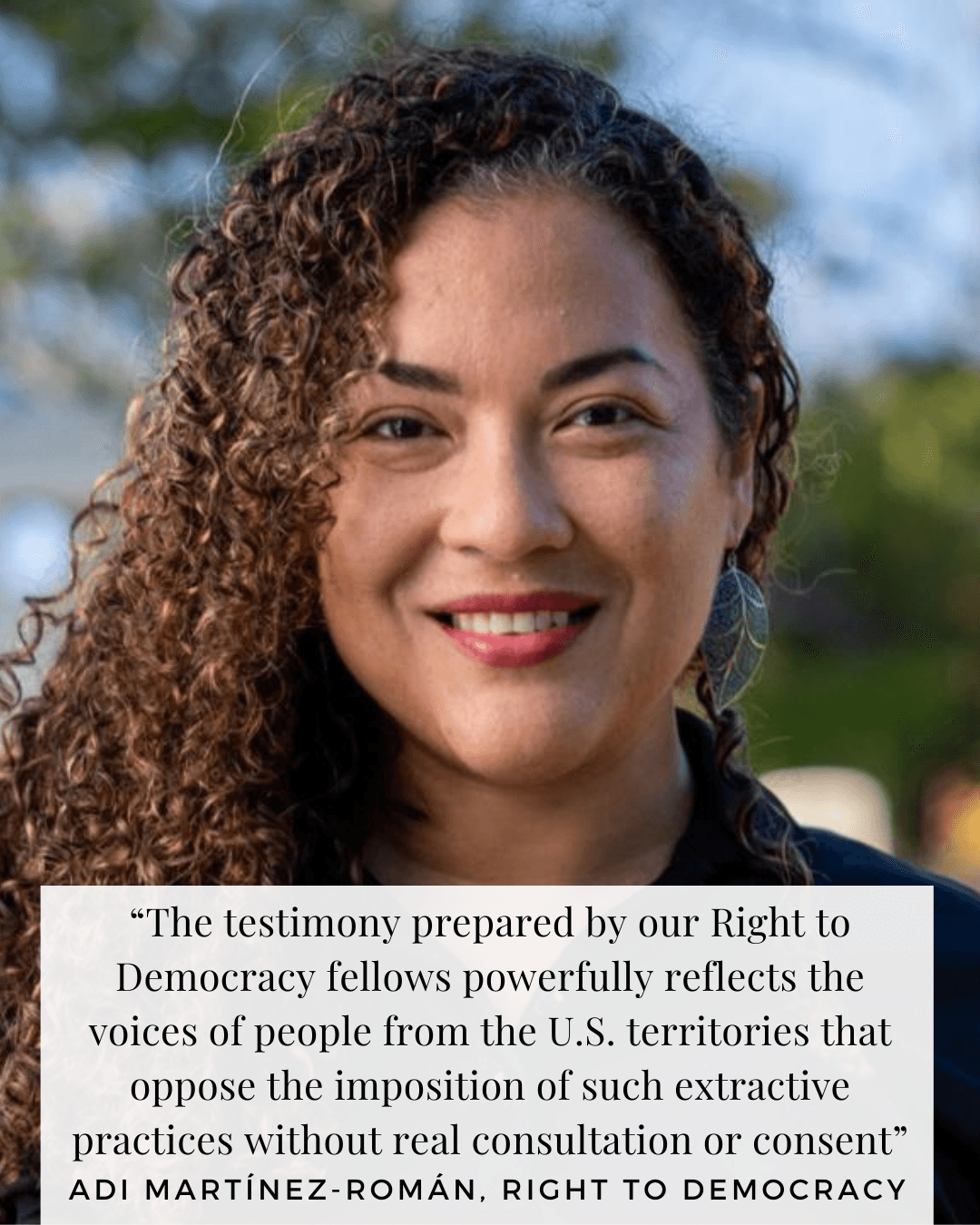
The movement is also driven by a commitment to democratic participation. As Adi Martínez-Román, co-director of Right to Democracy, emphasized after the congressional hearing, “We worked to make sure that voices from the territories were heard… which powerfully reflects the voices of people from the U.S. territories that oppose the imposition of such extractive practices without real consultation or consent.”
Deep sea mining threatens ecosystems scientists are only beginning to understand, and its potential impacts fall disproportionately on Indigenous and territorial communities. The America the Beautiful for All Coalition is committed to ensuring these communities are not sidelined, especially when the stakes are as high as the health of one of the planet’s most biodiverse ocean regions
The bipartisan concern highlighted in the recent congressional hearing reinforces what Pacific communities have been saying for decades: decisions about the ocean must respect free, prior, and informed consent, honor cultural relationships to place, and safeguard ecological integrity.
The 60,000 petitions delivered this month show a movement growing in momentum and reach. They demonstrate a fundamental truth: when people across the U.S. territories unite, their collective power is undeniable. America the Beautiful for All is proud to stand alongside Pacific leaders, helping ensure their voices shape policy—not as an afterthought, but as a driving force.
This story was shared with permission. The storyteller maintains editorial review rights over their narrative.
